

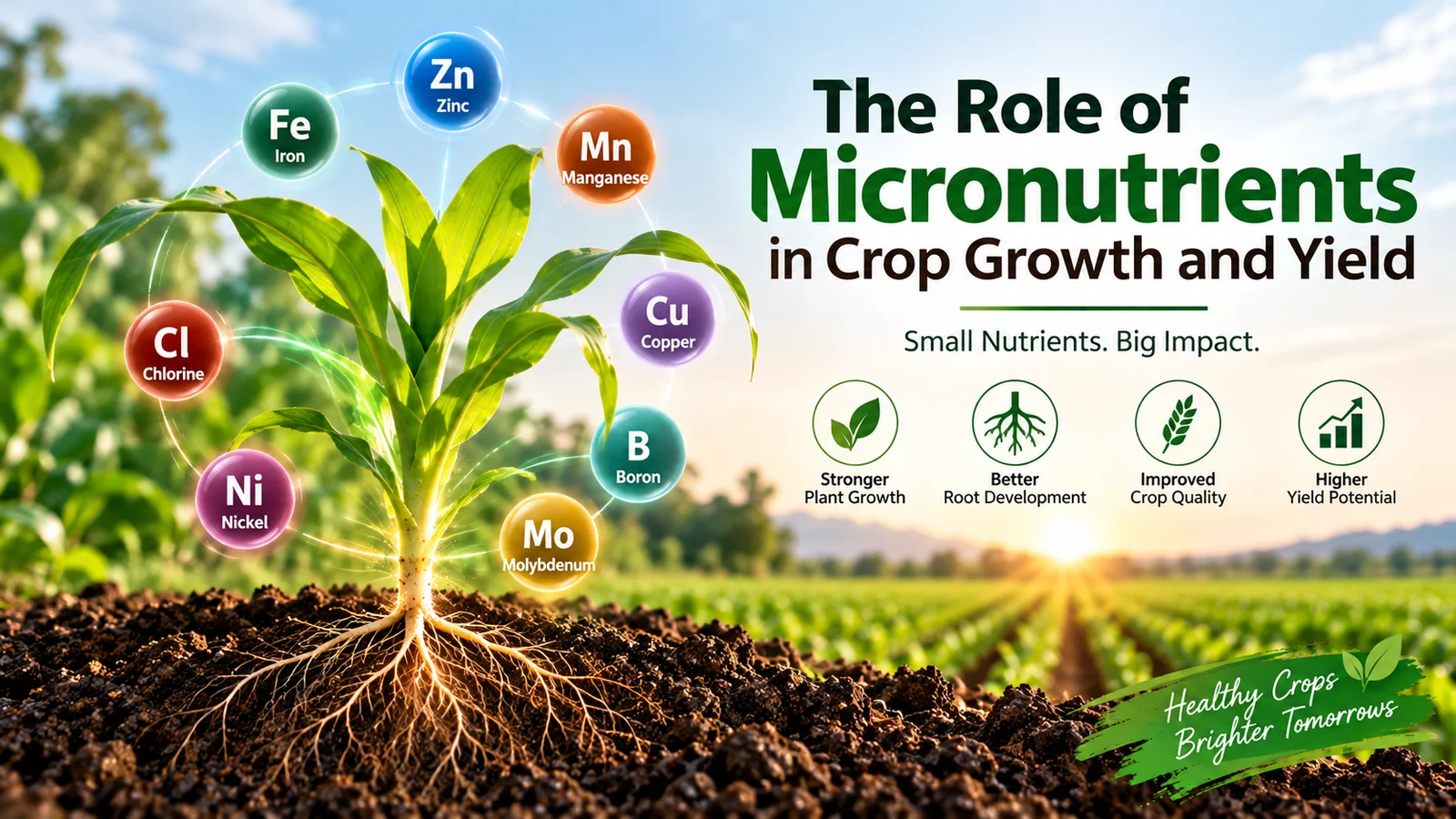
The Role of Micronutrients in Crop Growth and Yield
In modern agriculture, achieving healthy crop growth and higher yields requires more than just supplying the major nutrients such as nitrogen, phosphorus, and potassium. Micronutrients are required by plants in much smaller quantities, but they play essential roles in plant growth, metabolism, disease resistance, and crop quality.
When micronutrients are deficient, plants may experience poor growth, yellowing of leaves, weak stems, reduced flowering, and lower yields. Therefore, maintaining a balanced supply of micronutrients is an important part of effective soil and crop management.
What Are Micronutrients?
Micronutrients are essential nutrients that plants need in relatively small amounts. Despite being required in small quantities, they are involved in critical physiological and biochemical processes.
The important micronutrients required by plants include:
- Iron (Fe)
- Zinc (Zn)
- Manganese (Mn)
- Copper (Cu)
- Boron (B)
- Molybdenum (Mo)
- Chlorine (Cl)
- Nickel (Ni)
Each micronutrient has a specific function, and a deficiency of even one can affect overall plant performance.
Why Are Micronutrients Important for Crops?
1. Support Photosynthesis
Micronutrients such as iron and manganese are involved in processes associated with photosynthesis. Healthy photosynthesis allows plants to convert sunlight, water, and carbon dioxide into energy needed for growth.
A deficiency can result in poor plant development and reduced biomass production.
2. Improve Nutrient Utilization
Micronutrients help plants efficiently utilize other nutrients. For example, zinc, iron, manganese, and copper participate in various enzyme and metabolic processes that influence nutrient utilization and plant development.
Providing a balanced nutrient supply helps crops make better use of the nutrients available in the soil.
3. Promote Root Development
A healthy root system is essential for absorbing water and nutrients. Zinc and boron, among other nutrients, contribute to normal root growth and development.
Strong roots can help plants establish themselves better and access nutrients and moisture from the soil.
4. Encourage Flowering and Fruit Development
Micronutrients play an important role during reproductive stages of crop growth. Boron, in particular, is associated with processes involved in flowering, pollen development, fertilization, and fruit or seed formation.
An adequate micronutrient supply can therefore contribute to better reproductive development and crop quality.
5. Improve Plant Strength and Disease Resistance
Micronutrients such as copper, manganese, and zinc contribute to enzyme activity and other physiological processes that help maintain healthy plants.
Balanced nutrition can improve plant vigor and help crops better tolerate environmental and biological stresses.
Common Micronutrient Deficiencies in Crops
Micronutrient deficiencies can vary depending on soil type, crop, climate, pH, moisture conditions, and previous fertilizer applications.
Some common symptoms include:
| Micronutrient | Common Deficiency Symptoms |
|---|---|
| Zinc | Stunted growth, reduced leaf development |
| Iron | Yellowing between leaf veins, especially in younger leaves |
| Boron | Poor flowering, reproductive and growing-point problems |
| Manganese | Interveinal chlorosis and reduced plant growth |
| Copper | Weak growth and poor reproductive development |
| Molybdenum | Poor nitrogen utilization and leaf symptoms |
| Chlorine | Reduced plant growth and physiological abnormalities |
| Nickel | Problems with nitrogen metabolism and plant development |
Symptoms can sometimes look similar across different nutrient deficiencies, so soil and plant testing is preferable to diagnosing deficiencies based only on visual symptoms.
Factors That Affect Micronutrient Availability
The presence of a micronutrient in soil does not always mean that it is readily available to plants. Several factors influence nutrient availability.
Soil pH
Soil pH has a major influence on the availability of many micronutrients. Changes in pH can make certain nutrients less available for plant uptake.
Soil Organic Matter
Organic matter can influence nutrient retention and availability while also supporting biological activity in the soil.
Soil Type
Sandy, clayey, alkaline, and other soil types can differ significantly in their ability to retain and supply micronutrients.
Moisture Conditions
Excessive moisture or prolonged drought can affect nutrient movement and root uptake, potentially contributing to nutrient deficiencies.
Crop Requirements
Different crops have different nutrient requirements. A micronutrient management strategy that works for one crop may not be suitable for another.
How to Manage Micronutrient Deficiencies
Effective micronutrient management should begin with identifying whether a deficiency actually exists.
1. Soil Testing
Soil testing can help determine nutrient availability and identify potential deficiencies before they significantly affect crop performance.
2. Balanced Fertilization
Farmers should focus on balanced nutrition rather than relying exclusively on NPK fertilizers. Where required, micronutrients can be incorporated into the overall fertilizer program.
3. Foliar Application
Certain micronutrients can be applied directly to plant foliage when appropriate. Foliar feeding can provide nutrients through the leaves and may be useful when soil conditions limit nutrient availability.
4. Soil Application
Micronutrient fertilizers can also be applied to the soil depending on the nutrient, crop, soil condition, and recommended application method.
5. Organic Matter Management
Adding suitable organic materials can contribute to better soil structure and nutrient cycling, supporting a healthier growing environment for crops.
Micronutrients and Crop Yield
Crop yield depends on several factors, including genetics, water availability, soil fertility, pest management, weather, and overall nutrient balance.
Micronutrients do not replace primary nutrients such as nitrogen, phosphorus, and potassium. Instead, they complement macronutrient management by supporting important plant processes.
Even when a micronutrient is needed only in a small quantity, a deficiency can limit plant growth and prevent the crop from reaching its full yield potential. This makes micronutrient management an important component of a complete crop nutrition program.
The Importance of Balanced Crop Nutrition
Successful crop production is not simply about applying more fertilizer. It is about providing the right nutrients, in the right amounts, at the right time, and through an appropriate application method.
A balanced approach combining macronutrients, micronutrients, organic matter, proper irrigation, and good agricultural practices can help create favorable conditions for healthy crop development.
Conclusion
Micronutrients may be required in small quantities, but their contribution to crop growth and productivity is significant. From supporting photosynthesis and enzyme activity to promoting root development, flowering, nutrient utilization, and plant health, these nutrients play an essential role throughout the crop life cycle.
For farmers and growers, regular soil testing and balanced nutrient management are valuable tools for identifying and correcting micronutrient deficiencies. By paying attention to both macro- and micronutrients, farmers can build healthier soils, stronger crops, and more productive agricultural systems.
Healthy crops start with balanced nutrition—and micronutrients are an essential part of that balance.